
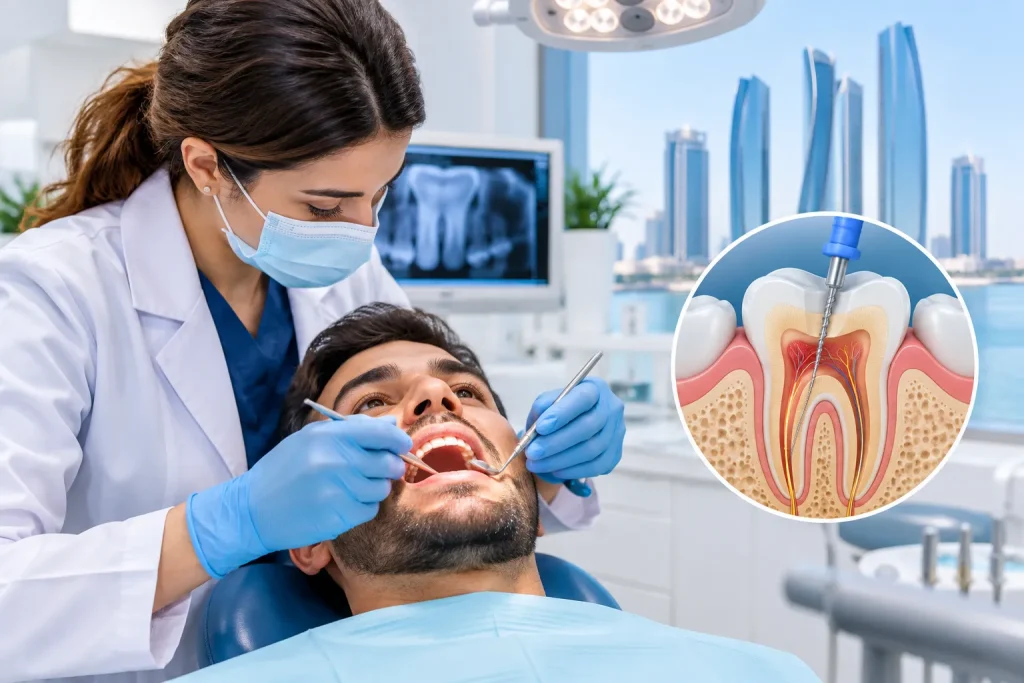
Few dental phrases cause as much worry as “you need a root canal.” For many people the words bring to mind long appointments and pain. In reality, root canal treatment in Abu Dhabi and the rest of the UAE is a routine procedure. It is done under local anaesthesia, and its purpose is to relieve pain and save a tooth you would otherwise lose.
This guide explains what a root canal is, the warning signs, how the procedure works step by step, what recovery looks like, and how to protect your teeth afterwards. If you are dealing with tooth pain now, it should help you decide what to do next.
What Is Root Canal Treatment?
Every tooth has a soft centre called the pulp. It contains nerves, blood vessels and connective tissue, and it sits inside narrow channels, the root canals, that run down through the roots of the tooth. The pulp matters most while the tooth is developing. A fully grown tooth can survive without it, because the surrounding tissues keep it nourished.
When bacteria reach the pulp, it becomes inflamed or infected. This usually follows deep decay, a crack or chip, repeated dental work on the same tooth, or a knock to the tooth. An infected pulp cannot heal on its own. It can cause severe pain and swelling, and the infection can spread to the bone around the root and form an abscess.
Root canal treatment, also called endodontic treatment, removes the infected pulp, cleans and disinfects the canals, and seals them. The tooth is then restored, usually with a filling or crown. As the NHS explains in its guide to root canal treatment, the goal is to remove the infection and keep the natural tooth in place, avoiding an extraction.
Signs You May Need a Root Canal
Only a dentist can tell you whether you need a root canal. Some symptoms do suggest the pulp may be involved:
- Persistent or severe toothache. The pain may be constant, or it may throb and get worse when you lie down or at night.
- Lingering sensitivity to hot or cold. Brief sensitivity is common. If the discomfort lasts well after the hot drink or ice cream is gone, the pulp may be inflamed.
- Pain when chewing or biting. Tenderness under pressure often points to an infection around the root tip.
- A darkened tooth. A tooth that turns grey or dark may have a damaged pulp.
- Swollen, tender or tender-looking gums. There may also be a small pimple-like bump on the gum, which is a sign of a draining abscess.
- A cracked or deeply decayed tooth. Bacteria can reach the pulp through a crack or cavity even when the tooth does not hurt yet.
- Swelling in the face or cheek, or a bad taste in the mouth. These can mean the infection is spreading, so book an urgent appointment.
Sometimes there are no symptoms at all, and the problem only shows up on an X-ray during a routine visit. This is one reason regular check-ups matter. Your dentist can find problems before they become painful. You can read more about our periodic dental checkups and why they are worth keeping up.
Why Saving Your Natural Tooth Is Usually the Best Option
When a tooth is badly infected, some people assume pulling it out is quicker and simpler. In most cases keeping the natural tooth is the better choice, for several reasons:
- Natural chewing function. Your own tooth is designed to handle the forces of biting and chewing.
- Protecting neighbouring teeth. A gap can cause nearby teeth to drift, which changes your bite.
- Preserving jawbone. The roots of your teeth help keep the surrounding bone strong. Bone can shrink after an extraction.
- Appearance. A treated tooth can look just like the rest of your smile.
- Avoiding further treatment. Replacing a missing tooth usually means a bridge or implant, which takes more time and more appointments.
If a tooth really cannot be saved, for example because it has fractured below the gum line, your dentist will explain the alternatives. We offer bridges and crowns to restore function and appearance.
The Root Canal Procedure, Step by Step
Knowing what happens takes much of the fear out of it. Here is the usual process.
1. Examination and digital X-ray
Your dentist examines the tooth, checks the gums, and tests how the tooth responds to temperature and pressure. A digital X-ray shows the shape of the root canals and any infection in the surrounding bone. Digital X-rays use a lower radiation dose than traditional film and give an image straight away.
2. Local anaesthesia
The area around the tooth is numbed, so the procedure should not be painful. Tell your dentist straight away if you feel any discomfort. More anaesthetic can be given.
3. Creating access
A small opening is made in the top of the tooth, giving access to the pulp chamber and the root canals. A thin sheet called a rubber dam is often placed around the tooth to keep it clean and dry during treatment.
4. Cleaning and shaping the canals
The infected or damaged pulp is removed. Fine instruments then clean, shape and disinfect the canals, using antibacterial solutions to flush out bacteria. This is the most important stage, because any bacteria left behind can cause the infection to return.
5. Filling and sealing
Once the canals are clean and dry, they are filled with a biocompatible material and sealed to stop bacteria getting back in. A temporary or permanent filling then closes the access opening.
6. Final restoration
A tooth that has had a root canal is often more fragile than before, particularly a back tooth that takes heavy chewing forces. Many such teeth need a crown to protect them from fracturing. A crown restores both strength and appearance, and your dentist will advise you on the right restoration for your tooth.
How Long Does It Take, and Does It Hurt?
Treatment time depends on the tooth. Front teeth have one canal and are usually quicker, while molars can have three or four. Some root canals are completed in a single visit, while others need two or more, particularly where there is a significant infection. Your dentist will give you an estimate after the examination.
On pain, the procedure itself is done under anaesthesia and should feel similar to having a filling. The pain people associate with root canals comes from the infection, and treatment relieves it. You may have mild soreness for a few days afterwards, which is normal.
Recovery and Aftercare
Most people return to normal activities the same day or the next. These tips support healing:
- Wait until the numbness wears off before eating, so you do not accidentally bite your cheek or tongue.
- Be gentle with the treated tooth. Avoid hard or sticky food on that side until the final restoration is in place.
- Take pain relief as advised. Over-the-counter painkillers are usually enough, but follow your dentist’s guidance.
- Keep brushing and flossing. Clean thoroughly but gently around the treated tooth.
- Return for your permanent restoration. A temporary filling is not meant to last. Delay increases the risk of the tooth breaking or becoming reinfected.
- Contact your dentist if you notice problems. Severe pain, swelling, a fever, or a bite that feels uneven should be checked.
With good care, a tooth that has had a root canal and a proper restoration can last for many years, often for life.
Can a Root Canal Be Avoided?
The best way to avoid one is to prevent the decay and damage that lead to it. These habits make a real difference:
- Brush twice a day with fluoride toothpaste and clean between your teeth daily.
- Limit sugary snacks and drinks, which feed the bacteria that cause decay.
- Wear a mouthguard if you play contact sports, and ask about a night guard if you grind your teeth.
- Do not use your teeth as tools to open packaging or crack hard objects.
- Book regular check-ups and cleanings. Professional scaling and polishing removes plaque and tartar that brushing cannot, and early treatment of small cavities keeps them from reaching the pulp.
- Treat problems early. A small filling now is much simpler than a root canal later.
Root Canal vs. Extraction: How to Decide
If you are unsure which route to take, consider these points:
| Factor | Root canal | Extraction |
|---|---|---|
| Keeps natural tooth | Yes | No |
| Treats infection | Yes | Yes |
| Risk of bone loss | Lower | Higher without replacement |
| Further treatment needed | Often a crown | Often a bridge or implant |
| Best when | The tooth structure is salvageable | The tooth is too damaged to restore |
Your dentist will assess the amount of healthy tooth left, the condition of the surrounding bone, and your overall health before recommending an option.
A Smile That Looks as Good as It Feels
Once a tooth has been treated and restored, you may also want to improve how your smile looks. Treated teeth can occasionally darken over time. Cosmetic options include professional whitening, which we cover in our guide to professional teeth whitening in Abu Dhabi, and porcelain veneers for a longer-lasting change. Ask your dentist which treatments suit you.
Choosing the Right Clinic for Root Canal Treatment in Abu Dhabi
When you are in pain, it is tempting to book the first available appointment. A few things are still worth checking:
- Licensing. Make sure the clinic is licensed by the relevant health authority.
- Technology. Digital X-rays and modern equipment help with accurate diagnosis and treatment.
- Clear communication. A good dentist explains your options, the treatment steps and the costs before starting.
- Continuity of care. A clinic that can handle the root canal, the crown and your regular dental care saves you from visiting several providers.
- Convenient hours and location. Follow-up appointments are much easier when the clinic fits your schedule.
Al Qadi Medical Center is a private medical center in Abu Dhabi that works with the health authority to provide safe care that meets international standards. Our dentistry services cover preventive, restorative and cosmetic care for adults and children under one roof. You can meet the clinicians on our team page before your visit.
Frequently Asked Questions
Is root canal treatment safe?
Yes. It is one of the most common dental procedures and has a high success rate when done properly and followed by a good restoration.
Will I need a crown afterwards?
Often, yes, especially for back teeth. Your dentist will recommend what your tooth needs.
Can I drive home after the procedure?
Most patients can, since local anaesthesia does not affect alertness. Ask your dentist if you are unsure.
What happens if I leave an infected tooth untreated?
The infection can spread to the jawbone and surrounding tissues, causing abscesses, swelling and more serious health problems. The tooth may eventually be lost.
Can children need root canals?
Yes, though the approach differs for baby teeth. Our dentistry team also looks after children, so ask about our children’s services when you book.
How do I know if my pain is from a root canal problem?
You cannot be sure without an examination. Persistent pain, swelling or sensitivity that lingers should always be checked.
Final Thoughts
Root canal treatment is a safe way to relieve tooth pain, clear infection and keep a natural tooth that might otherwise be lost. The sooner a problem is diagnosed, the simpler the treatment tends to be, so do not wait for the pain to become unbearable.
If you have a lingering toothache, swelling, or heat and cold sensitivity that will not go away, our team can examine your tooth and explain your options clearly.
Ready to book? Call us on +971 2 443 7777, message us on WhatsApp, or book an appointment online. We are open Monday to Sunday, 11:00 AM to 9:00 PM.
This article is for general information and does not replace a dental examination. Please consult a licensed dentist about your own symptoms and treatment.